Europe · Cost-of-living protests
Europe's youth take to the streets: France plans a nationwide strike as protests spread over housing and costs
4.1 lakh marched in France, Italy deployed troops in Milan and Lisbon police cleared a housing camp as anger over rents and living costs spreads.
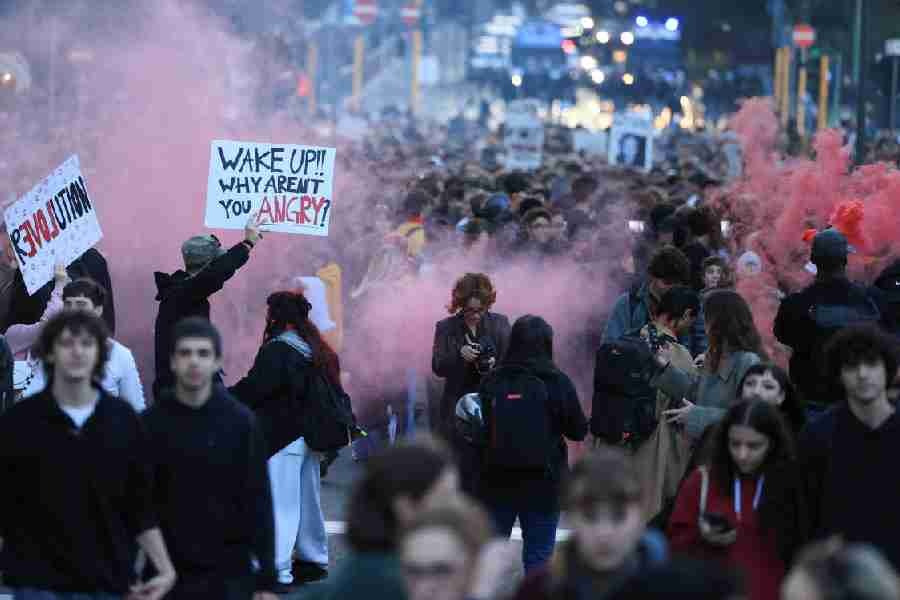
A wave of youth-led protest over rents, wages and the cost of living is spreading across Europe. French unions have called a nationwide strike, Italy has put soldiers on the streets of Milan, and Portuguese police have cleared housing protest camps in Lisbon and Porto, The Telegraph reported, citing Reuters and AP.
What began last month as a student movement in France over school conditions has grown into a broader revolt against governments' economic policies. Housing affordability has become the common thread, especially for young people.
France: a strike called for 5 November
France's Interior Ministry said 4.1 lakh people joined Saturday's marches on 24 October. A deployment of 70,000 police officers helped prevent a repeat of the looting and vandalism of 17 October. Arrests fell to 1,314, half the previous week's number, and about 50 officers were injured, against more than 1,000 the week before.
The lull may not last. Labour leaders have called for more protests on Saturday, 31 October, and a nationwide strike on 5 November. "We see an aggregation of anger," said Murielle Guilbert, co-leader of the left-wing Solidaires union federation, adding that students, workers and firefighters were converging. The Yellow Vests, the movement born in 2018 out of anger over fuel taxes, have also called for rallies, including sit-ins outside town halls and the National Assembly.
Police unions warn they do not have the staff to sustain the deployment for long. President Emmanuel Macron has little room to give ground. In 2019 he found money to cut fuel costs for the Yellow Vests; now public finances are strained, his mandate ends next April and his party has lost its majority. Talks with unions and students have begun, but protest leaders call the offers inadequate.
Italy: soldiers and boarded-up boutiques
Thousands of young people marched in Milan, Rome and Turin on Saturday. Prime Minister Giorgia Meloni sent 500 more soldiers to Milan, adding to the hundreds already there and to about 5,000 police and security personnel. She also announced tougher penalties for minors, who police said made up much of the previous week's violent crowds.
Milan stayed peaceful, though luxury stores, including Gucci, Tiffany and Omega, boarded up their windows. There were brief clashes in Rome and Turin. Protesters dumped manure outside the national energy regulator and burned an oversized mock electricity bill.
Portugal: housing camps cleared
In Lisbon, police moved in on a camp of more than 100 tents in Rossio Square shortly after 2am on Sunday, after thousands had marched against the housing crisis. They baton-charged demonstrators and arrested 25 people. A smaller camp of about 50 tents in Porto was also cleared, with six arrests. Police called the operation "proportionate" and reported seven minor injuries; the activist group Casa para Viver said 60 people were hurt.
The grievance is stark. Portuguese house prices have more than doubled since 2017, and rents on new leases have nearly doubled. The Bank of Portugal estimates a shortfall of 3 lakh homes, as many as Lisbon's entire housing stock. Protesters want the government to drop a bill that would make evictions easier and to cap rents on new leases.
Belgian police used tear gas on anti-government demonstrators in Brussels, and recent protests in Spain over housing shortages and soaring rents show the same pressures at work.
Raisina Wire analysis
Europe's protests are not one movement but one mood: a generation that cannot afford a home, facing governments with little money left to buy calm. France shows the bind most clearly. Policing can contain a Saturday, but it cannot answer wages, rents and public services, and the police themselves say the effort cannot be sustained.
For India, the immediate stakes are economic and political. A France heading into a strike with Macron's mandate ending in April, and an Italy fortifying its commercial capital, are partners with less bandwidth for trade and strategic initiatives. The deeper lesson travels further. When housing slips out of reach for the young, street anger follows, and it can spread from one country to the next faster than any government can respond.