Israel · Elections
Israel's hung Knesset: what a weakened Netanyahu means for India, Iran and Gaza
Netanyahu's bloc fell to 53 seats, eight short of a majority. India's defence ties will hold, but an Iran flare-up would hit it fast.
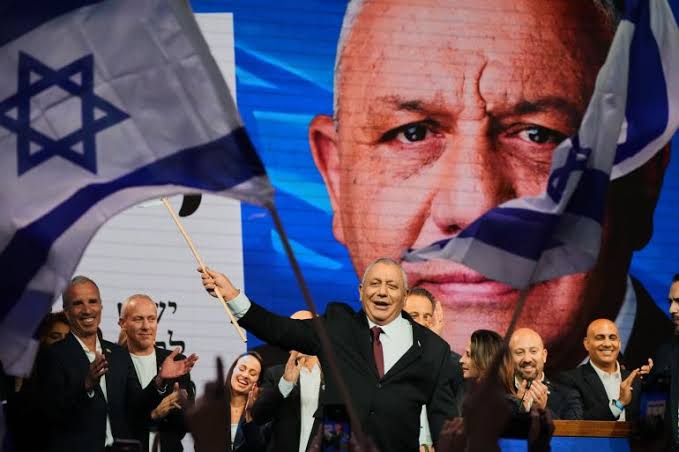
Israel went to the polls on 27 October and came back without a government. Prime Minister Benjamin Netanyahu's Likud-led bloc is the largest in the 120-seat Knesset, but at 53 seats it is eight short of the 61 needed to rule. For New Delhi, which has spent the past year lifting ties with Israel to a new level, the deadlock matters less for who wins than for what Israel does with its security powers while nobody does.
The opposition alliance led by former army chief Gadi Eisenkot won 48 seats. Arab-led parties took 19, their best result ever. Turnout was close to 78 per cent, also a record.
This was Israel's first national election since the Hamas attack of 7 October 2023 and the wars in Gaza, Lebanon and Iran that followed. Netanyahu ran as the leader who had seen the country through them. Voters only half agreed: his bloc fell from 68 seats to 53. Yet the opposition did not win a majority either.
Four ways out
- 1. **Netanyahu tries first.** He stays on as caretaker prime minister and will most likely get the first chance to build a coalition. President Isaac Herzog will consult the parties before he picks a candidate, and talks could run through several rounds.
- 2. **An Eisenkot government.** On paper the numbers add up: 48 opposition seats plus 19 Arab seats make 67. In practice, Naftali Bennett and Avigdor Liberman have both refused to depend on Arab parties, either inside a coalition or as outside support.
- 3. **A unity government.** Likud and parts of the opposition could reach 61 together. But Netanyahu would have to loosen his ties to his far-right and ultra-Orthodox partners, and the opposition would have to give up its central promise of ending his premiership. Eisenkot has said he will not serve under him.
- 4. **Defections or another vote.** Netanyahu could try to lure individual opposition members. If every route fails, Israel votes again, with budgets, laws and security policy on hold until then.
The Arab parties' record haul has changed the arithmetic even if they stay out of power. Arab citizens are about a fifth of Israel's population, and a 19-seat bloc is leverage that no coalition-builder can ignore entirely.
The short version: Netanyahu is weaker, not finished. Whether he survives depends on whether his rivals can unite.
Iran and Gaza: new face, same line
The deadlock comes as Israel remains in a standoff with Iran, Gaza's future is unresolved, the Lebanon front is tense and the West Bank is restive. A change at the top may not mean a change in strategy. Eisenkot, a former chief of the Israel Defense Forces, is hawkish on Iran and Hamas and opposes a Palestinian state. His quarrel with Netanyahu is mostly domestic: how the state is run, coalition bargains, and military-service exemptions for ultra-Orthodox men.
Analysts quoted by Reuters expect any Israeli leader to stay close to Washington if President Donald Trump decides to resume military action against Iran.
The bigger question is the interim. As caretaker, Netanyahu still takes the security decisions. A new clash with Iran could rally voters behind him, push rivals into a unity government, or draw retaliation and a longer war. Any of those would ripple through Gulf security, energy installations, shipping lanes and oil prices, and fuel importers such as India would feel it almost at once.
On Gaza, both Netanyahu and Eisenkot insist that Hamas must be disarmed. A new prime minister might change Israel's tone with the United States or its handling of settler violence in the West Bank. But the vote has produced no new consensus on Palestinian statehood, and a government scrambling to hold a majority is in no position to make painful concessions.
Why it matters to India
India-Israel ties have long since moved beyond arms purchases. They now take in joint production, technology, artificial intelligence, cybersecurity, agriculture, water, space and trade.
Prime Minister Narendra Modi's visit to Israel in February 2026 raised the relationship to a "Special Strategic Partnership for Peace, Innovation and Prosperity", with commitments to deepen defence cooperation and work together on emerging technologies. That built on a defence cooperation memorandum signed in November 2025.
The Modi-Netanyahu rapport has made the partnership highly visible, but it does not rest on it. Defence contracts, technology transfers and research links have been built over years, and a new prime minister in Jerusalem is unlikely to unpick them.
The tone could shift. An Eisenkot government might try to repair relations with Europe and respond to criticism of Israel's conduct in Gaza. New Delhi's task would be to build working ties with new leaders without losing momentum.
Defence remains the core. India relies on Israeli technology for air defence, surveillance, drones and precision weapons. The next phase is expected to focus on co-production and technology sharing, in step with India's drive to make more of its own military equipment.
The balancing act
The neighbourhood complicates things. India has large stakes in the Gulf, long-standing ties with Iran and a vast diaspora across West Asia, and its energy supplies and trade routes are exposed to any instability there. The India-Middle East-Europe Economic Corridor and the I2U2 grouping both depend on calm; a fresh Israel-Iran war could set them back.
That leaves New Delhi on two tracks at once: deepening the partnership with Israel while keeping its doors open to the Arab world and Iran. Its position on a political settlement for the Palestinians will also count.
The bottom line
Israel's voters have settled nothing. Netanyahu has lost his majority, the opposition has yet to prove it can unite, and the Arab parties are stronger than ever, though how much that matters depends on who will work with them. The next government may sound different, but the threats that shape Israel's foreign policy are not going anywhere. For India, the test of the partnership is not who occupies the prime minister's office but how both countries navigate a dangerous region.