Israel Election
Israel's Rightward March: A change of leadership or The hardening of a State
Netanyahu faces a defining electoral test, but the deeper question is whether Israel’s political centre has moved so far right that even his defeat may not change the country’s strategic course.
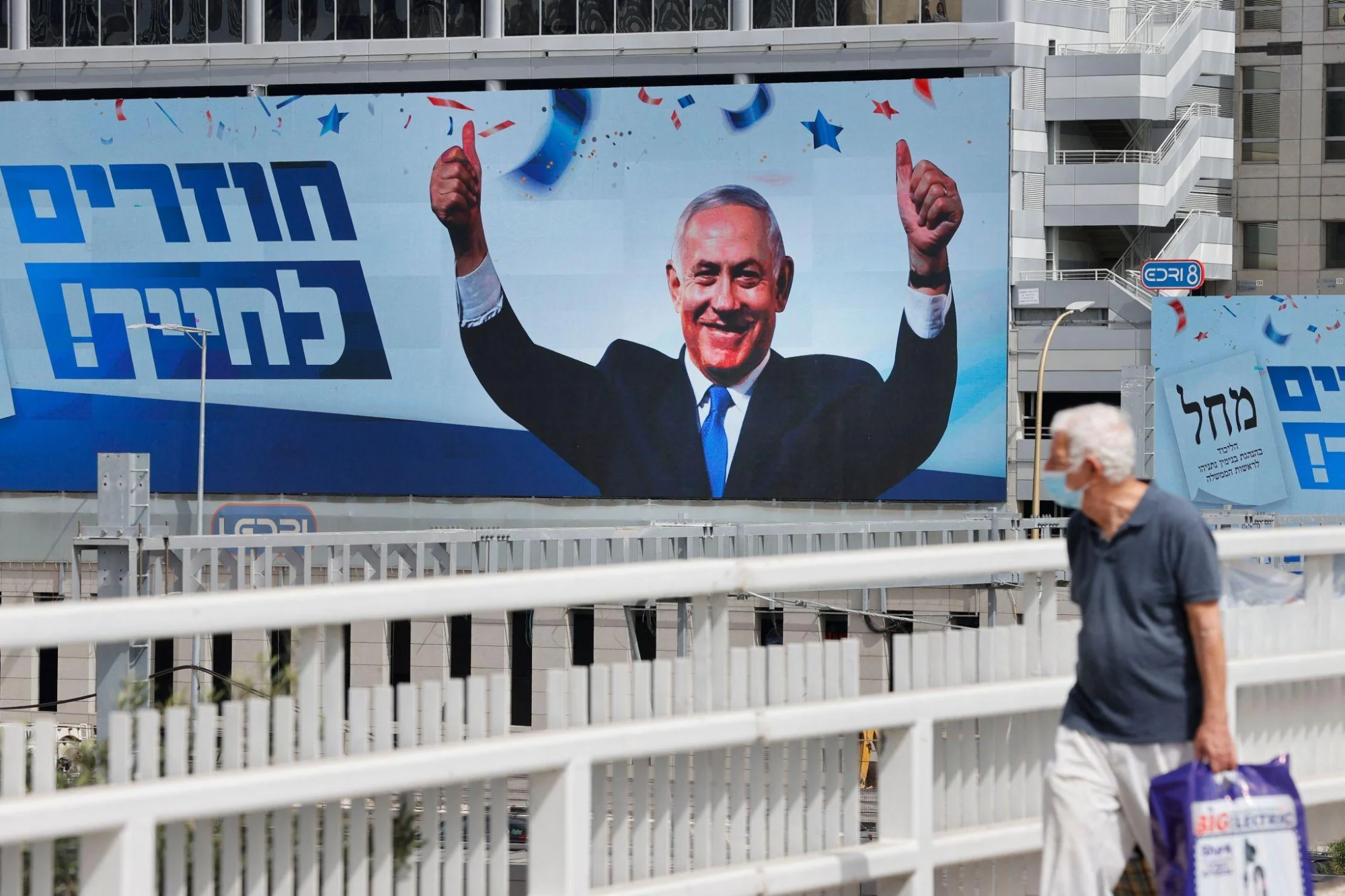
Israel votes on October 27 in an election that could reshape its political leadership. But the real story is not simply whether Benjamin Netanyahu survives another electoral challenge. It is whether a country transformed by war, security failures and deepening ideological polarisation is capable of changing course—or whether its next government will continue along the same hardening trajectory under a different political arrangement.
This is Israel’s first general election since the Hamas-led attacks of October 7, 2023, and the devastating war in Gaza that followed. The vote takes place amid continuing regional tensions, intense domestic divisions and mounting international criticism of Israeli military operations and settlement policies. Al Jazeera+1
The stakes extend well beyond Netanyahu’s political future. Netanyahu’s real test: power, accountability and survival Netanyahu, Israel’s longest-serving prime minister, is seeking to maintain his hold on power through an alliance that includes right-wing, far-right and ultra-Orthodox parties.
His opponents are challenging his record on national security, the handling of the October 7 intelligence and security failures, judicial reform and the direction of Israel’s prolonged military confrontations. His ongoing corruption trial adds another dimension to the political stakes.
Yet an electoral setback would not automatically translate into a fundamental change in Israeli policy. The opposition is itself politically diverse, and disagreements over security, the Palestinians and the future of the state could complicate the formation of a stable alternative government. Al Jazeera+1
The critical distinction is between removing a leader and reversing the political consensus that has sustained him. The rightward shift is bigger than one man Israel’s rightward movement did not begin with this election, nor is it confined to Netanyahu’s Likud party.
Recent reporting has highlighted strong right-wing and centre-right identification among young Jewish Israeli voters. The trend suggests that the country’s political debate is being shaped by forces that may outlast any single government. Al Jazeera+1
Security anxieties, the trauma of October 7, distrust of political opponents and resistance to concessions over Palestinian territories all form part of this landscape. The result is a political environment in which a change of prime minister may prove easier than a change in strategic doctrine.
That distinction matters. A new government could alter diplomatic language, coalition priorities or relations with Western partners without fundamentally changing Israel’s approach to Gaza, the occupied West Bank or regional deterrence. Gaza remains the defining test For Palestinians, the election offers little certainty that a change in government will translate into a change in lived reality.
Palestinians in Gaza remain concerned about displacement, restrictions, reconstruction and the prospects for a durable political settlement. Meanwhile, Palestinians in the occupied West Bank face the consequences of settlement expansion and the broader conflict over territory and sovereignty. Al Jazeera+1
The crucial question is not merely whether Israel elects a new prime minister. It is whether any incoming government will pursue a credible political framework that addresses Palestinian rights, security and self-determination.
Without such a shift, electoral change could amount to a change of personnel rather than a change of direction. The arithmetic of power Israel’s proportional electoral system makes coalition negotiations central to government formation. The Knesset has 120 seats, and a governing majority requires 61.
Pre-election projections indicated that neither the pro-Netanyahu bloc nor the principal opposition alliance was assured of that threshold. Smaller parties, including Arab-led political formations, could therefore influence the eventual balance of power—even as major blocs face political constraints on cooperating with them. Al Jazeera+1
This creates a paradox: the electorate may deliver a verdict against the incumbent without producing a clear alternative government. Prolonged negotiations, an unstable coalition or another election could follow.
In that scenario, political deadlock would not necessarily produce a policy reset. It could instead prolong the existing government's caretaker role and defer the decisions that the election is supposed to resolve. Why the outcome matters beyond Israel The consequences will reach across the Middle East and beyond.
For the United States, the election will shape the political context for managing its relationship with Israel, regional security and diplomacy over the Palestinian question. For Arab governments, it will influence the prospects for regional de-escalation and any renewed diplomatic engagement. For European capitals, it will affect an already strained debate over international law, settlements and accountability.
For India, the strategic implications are equally significant. Israel is an important defence and technology partner, while India also has substantial interests in Gulf stability, energy security, trade routes and its relationships across the Arab world. Escalation in the region can complicate these priorities regardless of who occupies the Israeli prime minister’s office.
New Delhi’s challenge will be to protect its strategic partnerships without losing sight of the wider regional consequences of a prolonged conflict. The verdict beyond the vote This election may decide who leads Israel next. It cannot, by itself, resolve the deeper questions confronting the country: accountability for security failures, the future of the Palestinians, the balance between democratic institutions and executive power, and the strategic costs of prolonged conflict.
Netanyahu could survive through coalition negotiations. He could lose office but leave behind a political landscape still dominated by right-wing assumptions. Or Israel could enter another period of instability without a clear governing majority.
The decisive question is not simply whether Netanyahu wins or loses. It is whether Israel’s political system can produce a strategic alternative to the trajectory that has brought it to this moment.
Until that question is answered, a change at the top may prove less consequential than the hardening of the state beneath it.