ASIA DEFENCE : CHINA PAK TIES
Karakoram 2026: Inside China–Pakistan’s Expanding Military Partnership in Xinjiang
The first joint army training exercise between China and Pakistan marks a significant step in bilateral defence cooperation. From drone operations and live-fire drills to integrated command exercises, the training highlights a growing emphasis on interoperability—with implications for India and the wider regional security environment.
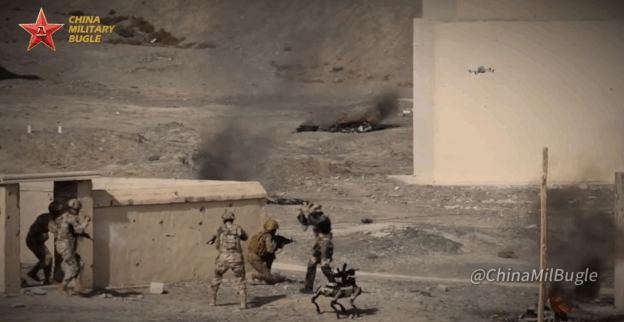
China and Pakistan have taken a consequential step in their military relationship with the completion of Karakoram 2026, a nine-day joint army training exercise conducted in Korla, in China’s Xinjiang Uygur Autonomous Region, from October 14 to 22.
The exercise was officially presented as a counterterrorism initiative focused on operations in high-altitude environments. Its significance, however, extends beyond the immediate training objectives. The two countries brought regular army forces into a new phase of structured cooperation, combining unmanned aerial vehicle operations, mobile target detection and engagement, long-range sniping, live-force drills and joint command activities.
For Beijing and Islamabad, the exercise offers an opportunity to improve coordination against shared security threats. For regional observers, it provides a clearer picture of how the two countries are attempting to translate their longstanding strategic partnership into practical military familiarity.
The development is relevant to India, given the wider China–Pakistan strategic relationship and the security dynamics of the Himalayan region. But the available evidence does not establish that Karakoram 2026 was preparation for a specific operation against India. Its immediate significance lies in the strengthening of military-to-military cooperation and the potential for greater interoperability.
From established partnership to army-level integration
China and Pakistan have maintained close defence ties for decades. Their cooperation spans arms procurement, military training, defence technology and coordination across different services.
Joint exercises are an established part of this relationship. The two countries have conducted naval drills, including the Sea Guardian series, as well as counterterrorism exercises such as the Warrior series. Karakoram 2026 adds a distinct dimension by bringing the regular armies into a dedicated joint training framework.
According to China’s Ministry of National Defense, this was the first joint army training exercise between the two countries. Its stated objective was to deepen counterterrorism cooperation and strengthen interoperability.
That distinction matters. Defence partnerships become more operationally meaningful when personnel move beyond observing each other’s capabilities and begin practising coordinated procedures. Joint command activities, mixed formations and task-based grouping can help participants understand how their counterparts communicate, assign responsibilities and respond to changing conditions.
Such familiarity does not automatically produce seamless battlefield integration. Differences in doctrine, equipment, communications systems and command structures can still complicate joint operations. Nevertheless, repeated training can reduce some of those barriers.
Karakoram 2026 therefore represents an institutional step forward, even if its long-term operational consequences remain to be demonstrated.
Drones move to the centre of the training agenda
One of the most significant features of the exercise was its emphasis on unmanned aerial vehicles, or UAVs.
China’s defence ministry identified drone-operation skills among the principal training areas. The programme also included mobile target search and firing, long-range sniping and live-force exercises.
The inclusion of UAV training reflects a broader transformation in contemporary warfare. Drones are increasingly used for surveillance, reconnaissance, target identification and battlefield situational awareness. In some conflicts, inexpensive unmanned systems have also changed how armed forces approach force protection, logistics and tactical planning.
For China and Pakistan, training in this area offers opportunities to develop common operating procedures and improve coordination between personnel working with different equipment.
The regional context is important. Pakistan faces persistent security challenges along its western frontier, including militant violence and cross-border attacks. The use of drones in surveillance and security operations has also become increasingly relevant across the region.
However, drone training should not be confused with proof of a particular offensive plan. The publicly disclosed exercise objectives concern counterterrorism and tactical coordination. Without additional evidence, it would be speculative to conclude that the UAV component was designed specifically for a future conflict with India.
The more defensible assessment is that both countries are responding to the growing importance of unmanned systems in modern security operations.
Chinese equipment and the possibility of deeper defence dependence
The exercise also provided Pakistani personnel with exposure to Chinese military equipment.
Chinese military reporting identified systems including Type 191 rifles, Type 201 squad automatic weapons, Type 11 armoured assault vehicles and Type 08 infantry fighting vehicles, alongside artillery and unmanned and counter-unmanned systems.
The use of Chinese equipment in training can help participants become familiar with its operation and tactical employment. It may also create opportunities for the two armed forces to develop common procedures around equipment handling and coordination.
There is a potential procurement dimension as well. When personnel train on a partner’s systems, familiarity can influence future assessments of their suitability. Yet equipment exposure alone does not establish that Pakistan has decided to purchase a particular platform.
The broader context is Pakistan’s longstanding reliance on Chinese defence technology. Chinese-origin aircraft, air-defence systems, armoured platforms and other capabilities form an important part of Pakistan’s military inventory.
That relationship offers Pakistan access to a major defence supplier and gives China a significant position in Pakistan’s defence ecosystem. At the same time, reliance on a single supplier can raise questions about maintenance, spare parts, technological autonomy and the diversification of defence procurement.
For Beijing, military cooperation can also reinforce the broader strategic relationship and help protect its economic interests in Pakistan, including projects associated with the China–Pakistan Economic Corridor.
Why Xinjiang and the high-altitude focus matter
The exercise took place in Korla, in Xinjiang, a region whose mountainous surroundings and difficult terrain make high-altitude training particularly relevant.
The stated emphasis on high-altitude counterterrorism reflects the practical challenges faced by forces operating in mountainous environments. Difficult weather, limited infrastructure, demanding logistics and restricted lines of movement can complicate surveillance and tactical coordination.
Training in these conditions can help troops improve their ability to communicate and operate under pressure.
The geography is also relevant to the broader China–Pakistan relationship. Both countries have security interests in areas connected to their shared frontier and wider regional routes. China is concerned about threats to its territory and to Chinese nationals and projects in Pakistan. Pakistan, meanwhile, faces militant activity and security pressures along its western borders.
These overlapping concerns provide a rationale for closer counterterrorism cooperation.
But the location should not be treated as evidence of a planned military deployment towards the India–China border. The publicly available information does not establish such an objective. The exercise’s terrain and training scenarios are consistent with the stated high-altitude counterterrorism mission.
Afghanistan–Pakistan tensions provide a wider security backdrop
Karakoram 2026 took place against a difficult security environment between Afghanistan and Pakistan.
Islamabad has repeatedly accused militants belonging to the Tehreek-e-Taliban Pakistan (TTP) of operating from Afghan territory and carrying out attacks inside Pakistan. Afghanistan’s de facto Taliban authorities have disputed aspects of Pakistan’s allegations.
Cross-border militant violence has added pressure to Pakistan’s counterterrorism efforts and complicated relations between the two neighbours.
For Pakistan, the ability to detect threats, coordinate forces and respond to attacks in difficult terrain remains a pressing security concern. UAV-based surveillance and improved tactical coordination may contribute to those objectives, although their practical effectiveness will depend on how training is implemented in the field.
China has its own reasons to be concerned about regional instability. Chinese nationals and infrastructure projects in Pakistan have faced security threats, making the protection of personnel and economic investments an important dimension of bilateral relations.
The two countries therefore have overlapping incentives to improve their capacity to address terrorism-related threats. Karakoram 2026 offers a mechanism for translating those concerns into regular military engagement.
What does this mean for India?
For India, the most important implication is the gradual strengthening of China–Pakistan military familiarity across multiple services.
The two countries already cooperate in defence procurement and conduct exercises involving air and naval forces. The introduction of a dedicated joint army training exercise broadens that framework.
The distinction is between a partnership that primarily involves the purchase and transfer of equipment and one that increasingly includes shared training, tactical familiarity and coordination between personnel.
Greater interoperability can have implications for regional military planning. It may improve the ability of the two countries to exchange information, coordinate responses to certain threats and operate more effectively in selected joint scenarios.
However, the extent of such integration should not be exaggerated. Participation in a joint exercise does not prove that the two militaries can conduct complex combined operations without significant limitations. Their respective doctrines, strategic priorities and operational requirements are not identical.
India must therefore distinguish between the measurable development of China–Pakistan military cooperation and assumptions about its possible future use.
The appropriate response is sustained assessment of military capabilities, equipment developments, exercise patterns and changes in regional security conditions—not conclusions based on a single drill.
The significance of the all-weather partnership
China and Pakistan frequently describe their relationship as an all-weather strategic partnership. Defence cooperation is one of its central pillars, alongside infrastructure, economic engagement and diplomatic coordination.
For Beijing, Pakistan has strategic importance because of its location, regional relationships and links to the China–Pakistan Economic Corridor. For Islamabad, China is a major source of military equipment, investment and diplomatic support.
These interests reinforce the relationship, although they do not eliminate differences in national priorities or the practical limitations of military cooperation.
Karakoram 2026 demonstrates that both sides are interested in making their defence partnership more structured and operationally relevant. The focus on regular army forces, drones and joint command activities suggests an effort to build practical familiarity rather than relying exclusively on equipment transfers or high-level political statements.
The next question is whether this training becomes a recurring mechanism and whether its lessons translate into changes in operational practice.
Beyond the exercise: Measuring what comes next
The completion of a military exercise is an event, not a final measure of capability.
Several indicators will help determine the lasting significance of Karakoram 2026: whether similar army exercises are repeated; whether cooperation expands into additional counter-drone and surveillance capabilities; whether the two militaries develop more integrated command procedures; and whether training is followed by new procurement or technology arrangements.
The extent to which participating units apply lessons in real-world counterterrorism operations will also matter.
For India and other regional observers, these developments should be assessed alongside wider changes in China–Pakistan defence cooperation, Pakistan’s security environment and the evolving military balance in South Asia.
Karakoram 2026 does not, by itself, prove preparations for a specific conflict. It does, however, mark a meaningful development in the institutionalisation of China–Pakistan army cooperation.
The larger strategic lesson is that military partnerships evolve not only through weapons purchases or diplomatic declarations, but through repeated training, shared procedures and growing familiarity between forces.
For Beijing and Islamabad, the exercise is another step towards a more structured defence relationship. For the region, it is a reminder that the practical dimensions of that partnership deserve close and evidence-based scrutiny.