Israel · Election 2026
Netanyahu posts AI image of a nuclear blast over Tel Aviv, two days before Israel votes
Sharing a call to "finish the work in Iran" in Trump's last two years, the PM drew charges of fearmongering from rivals
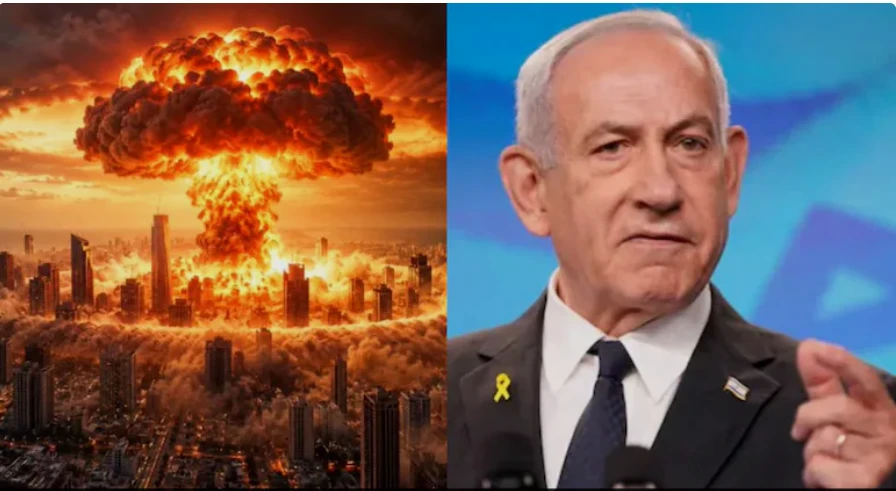
Two days before Israelis vote, Prime Minister Benjamin Netanyahu has put a mushroom cloud at the centre of his campaign. On 25 October 2026, he posted an AI-generated image of a nuclear explosion over Tel Aviv, with buildings engulfed beneath a giant cloud rising over a crowded city.
With the image, Netanyahu shared a statement by Israeli writer and political commentator Yuval Blumberg, NDTV reported. Its message: Iran is the only issue that matters, and Israel's window to deal with it is closing.
"Finish the work in Iran"
"The State of Israel is in real and tangible existential danger," the statement read. "If the Iranians acquire nuclear weapons, nothing will ever be the same again."
It dismissed other controversies as "staged and fabricated storms" meant to distract from what it called "completing the work in Iran". And it put a clock on the task: "We have another two years of Trump to finish the work in Iran, and there's no telling what will come after that." It named Kamala Harris as one possible successor and said "all the required resources of the state must be invested in this mission".
The pitch is plain. Netanyahu is asking voters to judge the election on a single existential threat, and to see him as the leader who can use Donald Trump's remaining time in office to remove it.
Rivals cry fearmongering
The opposition hit back within hours. Yair Golan, chairman of the Democrats, said the prime minister had "published an image of an atomic bomb over Tel Aviv" and asked that he be kept away from social media. "The man and those around him have lost it. The pressure is mounting," Golan said.
Gadi Eisenkot, chairman of Yashar, accused Netanyahu of being "hysterical" and of reaching, as in every campaign, for "the same method of lies and fearmongering".
The exchange shows how the vote is being fought: Netanyahu on security and Iran, his rivals on his judgement and his record.
What is at stake on Tuesday
Israel votes on Tuesday under proportional representation, with seats allocated by the nationwide vote. A party or coalition needs 61 of the Knesset's 120 seats to govern. In a fragmented system, making Iran the defining issue is a bid to set the terms on which the whole vote is fought.
Why India is watching
For New Delhi, the post is more than election theatre. A campaign built on "finishing the work in Iran", with an explicit two-year timetable tied to Washington, points to the risk of further confrontation in a region that matters directly to India.
As Raisina Wire has reported, India imports the overwhelming majority of the crude oil it consumes, and much of the Gulf's energy moves through the Strait of Hormuz. Escalation with Iran can raise oil, freight and insurance costs and pressure the rupee, even without a direct hit on supplies.
India has long balanced ties with Israel against its relationships with Iran and the Gulf. If the next Israeli government treats the coming two years as a deadline, that balancing act could get harder, and the economic stakes for India higher.
Whoever wins on Tuesday, Netanyahu's image has made one thing clear: Iran will dominate the next government's agenda.