STRATEGIC AFFAIRS
The Missile and the Barrel: How Houthi Attacks Can Hit India’s Economy
Disruption around the Red Sea and the Strait of Hormuz can raise the cost of imported oil, freight and insurance, placing pressure on the rupee, inflation and household budgets. The challenge is to turn maritime vulnerability into a national economic-security priority.
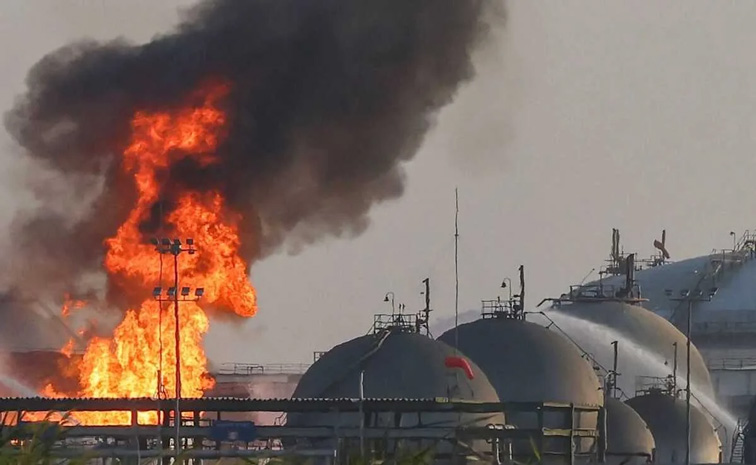
A missile launched over the Arabian Peninsula may appear distant from the daily economic life of an Indian household. But when shipping companies reconsider routes, insurers raise premiums and oil markets price in the risk of disruption, the consequences can travel much farther than the weapon itself.
That is the strategic significance of the renewed Houthi threat to regional shipping and energy infrastructure. The immediate confrontation may unfold around Yemen, Saudi Arabia and the Red Sea. Its economic consequences, however, can reach India through the price of crude oil, the cost of transporting goods, the availability of shipping capacity and the exchange rate.
The problem is particularly acute for India because the country imports the overwhelming majority of the crude oil it consumes. Its exposure is not limited to the physical supply of petroleum. It also depends on the security of maritime routes, the cost of insurance, the reliability of freight networks and the price at which imported energy is paid for in rupees.
The distinction is critical: a country does not need to lose an oil field or suffer a direct attack on a refinery to experience an energy shock. Sometimes the threat of disruption is enough to make every barrel more expensive.
When a regional conflict becomes an economic shock
The latest escalation has demonstrated how instability in the Middle East can spread across interconnected markets.
The Secretariat’s October 23 analysis described Houthi attacks on Saudi targets and the potential consequences for India’s economy. Separately, Reuters reported on October 22 that Brent crude rose to $113.17 a barrel, its highest close since May 4, amid renewed concerns over Middle Eastern supply disruptions.
These developments illustrate the mechanism through which geopolitical risk enters economic calculations. Traders anticipate possible shortages. Shipowners reassess routes. Insurers price in the possibility of damage or delay. Buyers begin competing for supplies that can be delivered with greater certainty.
The result is a risk premium that can be added to the cost of energy and trade even before a physical shortage becomes apparent.
For India, this creates a difficult policy problem. Energy prices are shaped by international markets, while the economic consequences are felt domestically through transport costs, manufacturing inputs, food distribution and household spending.
The transmission is not automatic or uniform. The impact depends on the duration and intensity of the disruption, the availability of alternative supplies, exchange-rate movements, domestic taxes and the extent to which fuel retailers pass on higher costs. But the exposure is real.
The geography of vulnerability: Bab el-Mandeb and Hormuz
Two maritime chokepoints are central to understanding the risk.
The Strait of Hormuz connects the Persian Gulf with the Gulf of Oman and the wider Indian Ocean. It is a critical route for oil and gas exports from Gulf producers.
Bab el-Mandeb, between Yemen and the Horn of Africa, connects the Gulf of Aden with the Red Sea. Ships using this route can proceed through the Suez Canal towards the Mediterranean and European markets.
These waterways serve different geographic functions, but their strategic importance overlaps. Hormuz is crucial to the movement of Gulf energy supplies. Bab el-Mandeb and the Red Sea are central to shipping between Asia and Europe.
If insecurity affects both routes simultaneously, the consequences can extend beyond oil. Container shipping, industrial inputs, fertilisers, consumer goods and other commodities may face longer journeys and higher costs.
A vessel avoiding the Red Sea may need to travel around the Cape of Good Hope. That diversion adds distance, fuel consumption, time and operating expenses. It also ties up vessels for longer periods, reducing the effective availability of shipping capacity.
The critical point is that maritime disruption does not require a formal blockade. A sustained perception of danger can be sufficient to persuade shipping companies to reroute their fleets.
This is why the economic impact of missile and drone attacks can be disproportionate to the number of vessels actually struck.
The barrel India buys is not the price on the screen
International crude benchmarks are important, but they do not tell the whole story of what Indian refiners pay.
The delivered cost of oil depends on the benchmark price, the grade of crude, freight, insurance, contractual terms and other costs associated with bringing the cargo to India. The Indian crude basket, calculated by the Petroleum Planning and Analysis Cell, is therefore a useful indicator of the cost of the country’s imported oil mix.
The Secretariat’s analysis put the Indian crude basket at around $120–122 a barrel during October, compared with lower levels in July and August. Those figures should be checked against the relevant official daily series before publication, but the underlying distinction remains important: the price of the physical barrel delivered to India can diverge from the headline international benchmark.
Shipping risk can widen that gap. If war-risk insurance becomes more expensive, freight rates rise or vessels take longer routes, importers face additional costs even if the benchmark price remains unchanged.
The reverse is also possible. If tensions ease, shipping routes reopen and insurance costs fall, part of the risk premium may unwind.
For India, the policy challenge is to distinguish between temporary market volatility and a sustained rise in the underlying cost of energy. That distinction matters for fiscal planning, fuel pricing, monetary policy and the management of foreign-exchange reserves.
Why the rupee matters as much as crude
India’s energy vulnerability has a second dimension: the exchange rate.
Crude oil is internationally traded primarily in US dollars. When the rupee weakens against the dollar, Indian buyers need more rupees to purchase the same dollar-priced cargo, all else being equal.
This means that a global oil shock can be amplified by currency depreciation. If crude prices rise while the rupee weakens, the domestic cost pressure can be greater than either movement would produce on its own.
The consequences extend beyond petrol and diesel. Oil is an input into transport, aviation, petrochemicals, plastics and several manufacturing processes. Higher energy and freight costs can affect the price of goods moving through the economy.
The impact on inflation depends on how much of the additional cost is passed through to consumers and how long the shock lasts. Government decisions on fuel taxes, public-sector oil marketing companies’ pricing and fiscal support can delay or soften the immediate effect. They do not necessarily eliminate the underlying economic cost.
When companies absorb higher input costs, their margins can narrow. When they pass the costs on, consumers may face higher prices. When the government provides relief, some of the burden may shift to public finances.
The economic shock therefore does not disappear simply because the retail price at a petrol pump remains unchanged.
Inflation and the Reserve Bank’s dilemma
An oil-price shock complicates monetary policy because it can increase prices while simultaneously weakening economic activity.
Higher energy costs feed into transportation, manufacturing and distribution. They can also raise production costs for businesses that rely on imported materials or energy-intensive processes.
If inflation accelerates, the Reserve Bank of India faces a difficult balance. Raising interest rates may help contain broader inflationary pressure and support the currency, but it can also increase borrowing costs for businesses and households.
Keeping rates unchanged may support credit and economic activity, but a prolonged external shock can intensify currency and inflation pressures.
Monetary policy cannot produce more oil, reopen a threatened shipping lane or reduce the cost of maritime insurance. Its role is to manage the wider effects of the shock, including inflation expectations and the possibility that a temporary price increase becomes more persistent.
That is why energy security cannot be treated as a matter for the petroleum ministry alone. It intersects with fiscal policy, monetary policy, trade, logistics and national security.
India’s strategic petroleum reserves: A buffer, not a complete shield
Strategic petroleum reserves are designed to provide a temporary cushion when normal supplies are disrupted. They can give policymakers time to arrange alternative cargoes, manage short-term shortages and respond to an emergency.
But reserve capacity must be considered in relation to actual consumption and import dependence. A stockpile that covers only a limited period of demand cannot indefinitely offset a prolonged disruption affecting multiple supply routes.
India has developed strategic petroleum storage, but the total buffer available in a crisis depends on the oil held in underground caverns, the inventories maintained by oil companies and the practical ability to release and distribute those stocks.
Comparisons with China, Japan and South Korea need to distinguish between government-controlled strategic stocks, commercial inventories, net import levels and the number of days of import cover. Different definitions can produce misleading comparisons.
The policy priority should be clear regardless of the precise comparison: India needs a resilient emergency buffer, transparent release procedures and regular assessments of how much usable oil is available under different disruption scenarios.
Strategic stocks are not a substitute for diversified supply. They are the time that diversification and crisis management need to work.
The cost extends beyond oil
The Red Sea is also an important corridor for India’s trade with Europe and other markets.
When ships are rerouted, exporters may face longer delivery times, higher freight charges and greater uncertainty about arrival dates. Importers can face increased costs for industrial components, chemicals, machinery and consumer products.
These effects can be particularly challenging for smaller businesses, which often have less bargaining power with shipping companies and fewer resources to absorb sudden increases in logistics costs.
Perishable goods, time-sensitive manufacturing inputs and products sold under fixed-price contracts may be especially exposed to delays. Even businesses that do not trade directly with the Middle East can be affected if their suppliers rely on the same maritime networks.
The impact is therefore broader than the energy sector. It can affect the competitiveness of Indian exports, the cost of imported inputs and the working capital businesses need to keep operating.
A prolonged disruption may also influence investment decisions if companies begin to view delivery uncertainty as a recurring feature of the trading environment.
Indian seafarers and the human cost
The maritime dimension is not only about cargo and commodity prices. It is also about the safety of the people who move global trade.
Indian nationals are an important part of the international maritime workforce. Attacks on commercial vessels can place Indian seafarers in direct danger, even when the ship is neither Indian-owned nor carrying cargo destined for India.
The missile strike on the tanker Marlin Luanda in early 2024, which had Indian crew members aboard, illustrated the risks faced by merchant sailors operating near conflict zones. The Indian Navy’s subsequent assistance to vessels in distress also highlighted the practical demands of protecting commercial shipping.
India has undertaken maritime security deployments in the Arabian Sea and Gulf of Aden, including Operation Sankalp. Such deployments can help provide reassurance, respond to emergencies and improve maritime awareness.
But naval escorts alone cannot eliminate the risk across every shipping route. Effective protection also depends on intelligence sharing, coordination with international partners, emergency response capabilities and clear communication with shipping companies and crews.
The safety of seafarers should therefore remain a central part of India’s maritime strategy, not merely a secondary consideration in the debate over oil prices.
Five priorities for India
First, strengthen the energy buffer. India should continue expanding usable strategic petroleum reserves and improve the ability to release stocks quickly when supplies are disrupted. The objective should be measured in practical days of coverage under realistic crisis scenarios.
Second, diversify suppliers and routes. A broader supplier base can reduce dependence on individual producers, while commercial flexibility can help refiners respond to changing freight and insurance costs. Diversification, however, must account for price, refinery compatibility and the reliability of supply.
Third, protect maritime trade. India should strengthen maritime-domain awareness, improve coordination with partner navies and maintain the ability to respond to threats against commercial shipping. The goal is to identify risks early and protect seafarers without assuming that naval deployments can remove all commercial risk.
Fourth, build resilience into trade logistics. Exporters and importers need alternative routing plans, clearer contingency arrangements and better access to information on freight and insurance costs. Support for smaller businesses may be necessary if disruption becomes prolonged.
Fifth, pursue de-escalation. India’s diplomatic relationships across the Gulf and wider West Asia provide channels for engagement with multiple parties. Protecting Indian nationals, keeping trade routes open and reducing the risk of further escalation should remain priorities regardless of the political alignment of the parties involved.
The larger strategic lesson
The most important lesson is that economic security and maritime security are inseparable.
India can maintain its distance from a regional conflict and still experience its consequences through oil prices, freight rates, insurance premiums, currency movements and inflation. In a globally connected economy, geographical distance offers no guarantee of economic insulation.
At the same time, it is important not to assume that every increase in oil prices is caused by Houthi activity alone. Supply decisions by major producers, wider regional hostilities, sanctions, demand conditions, currency movements and expectations in financial markets can all contribute to price changes.
The task for policymakers is to identify the channels through which the shock is transmitted and strengthen the country’s ability to absorb it.
A missile may be launched in one theatre of conflict, but its economic effects can travel through a shipping contract, an insurance premium and an oil invoice before reaching an Indian factory or household.
For India, the response must be broader than managing the next increase in fuel prices. It must involve stronger energy buffers, diversified supply, resilient trade logistics, maritime protection and diplomacy aimed at reducing the likelihood of further disruption.
The barrel is the economic consequence. The missile is the immediate threat. The strategic question is whether India can make its economy less vulnerable to the distance between the two.