India–US · Operation Sindoor
Trump puts Operation Sindoor in his midterm pitch, claims tariff threats stopped India–Pakistan war
At a Florida rally he repeated a claim India rejects, and complained again about missing the Nobel
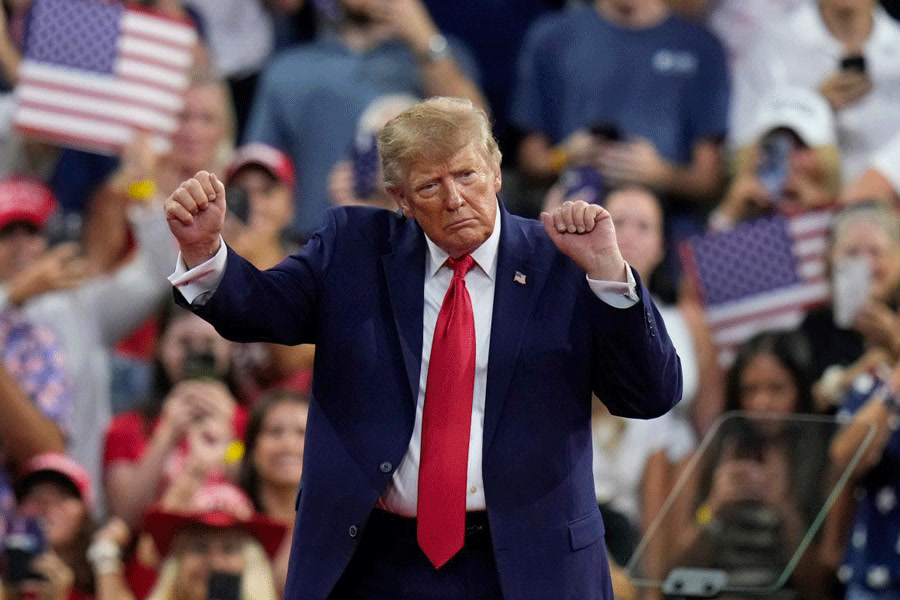
Operation Sindoor has become a line in Donald Trump's midterm stump speech. At a campaign rally in Fort Myers, Florida, on Friday, 23 October 2026, the US President again claimed he stopped India and Pakistan from escalating last year's military conflict by threatening both with crippling tariffs, PTI reported. He also complained, once more, that he had not been given the Nobel Peace Prize for it.
The claim, again
"You stop India and Pakistan, two nuclear nations," Trump told the crowd. He said he had warned both: "Fellas, if you guys are going to do that, you're not going to trade with the United States... I'm going to put massive tariffs on both of you, 250 per cent, so you won't be able to do any business."
According to Trump, the two neighbours were angry but stopped shooting. "Eleven planes were shot," he said, without saying whose. "I stopped all these wars, and it's really an honour to do so."
He added that he had "never made one phone call to the United Nations" and had settled the conflicts on his own. Then came the grievance: "I've settled eight wars. Did I get the Nobel Prize? No."
India's account is different
India has consistently rejected the claim that Trump brokered a ceasefire. New Delhi's position is that the understanding to halt military action was reached directly between India and Pakistan.
India launched Operation Sindoor in May 2025 against terrorist infrastructure in Pakistan and Pakistan-occupied Jammu and Kashmir, after the terror attack in Pahalgam on 22 April that killed several people. By India's account, military action was paused on 10 May at Pakistan's request, after Indian strikes hit key terror launchpads.
Why it keeps coming up
For Trump, the India–Pakistan story is a campaign asset: a crisis between two nuclear powers, ended, he says, by economic threats rather than diplomacy. Repeating it at midterm rallies, alongside the Nobel complaint, turns a contested foreign-policy claim into a domestic applause line.
For New Delhi, each retelling is an irritant. India has long resisted third-party mediation on Pakistan, and a US President publicly crediting tariff threats for ending an Indian military operation cuts against that position. It also lands at a sensitive time: as Raisina Wire has reported, the India–US trade deal has been stuck for months, with tariffs a central sticking point.
New Delhi is unlikely to engage the claim beyond restating its position. But the episode is a reminder of how Washington's domestic politics can spill into India's most sensitive security questions, and of why India guards its line on bilateralism so closely.