United States · Midterm elections
US midterms on 3 November: how they work, and why India is watching
All 435 House seats and a third of the Senate are on the ballot. The result will decide how far Trump can push tariffs, H-1B curbs and his foreign policy.
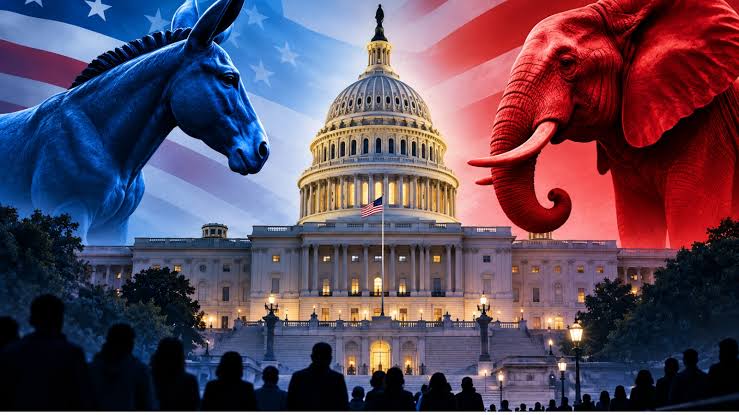
The United States votes on Tuesday, 3 November, in midterm elections that will decide who controls Congress for the last two years of Donald Trump's second term. All 435 seats in the House of Representatives and about a third of the 100-seat Senate are on the ballot, along with state governorships and thousands of local offices.
For New Delhi, the result matters well beyond Washington. Congress regulates foreign commerce and approves budgets, and the past year of tariffs, visa curbs and defence technology deals has shown how directly American politics reaches India's exporters, IT firms and students.
How American power is divided
The US runs on a strict separation of powers. The President, elected independently, heads the executive. The judiciary is the Supreme Court and the federal courts. The legislature is Congress, which has two chambers.
The House of Representatives has 435 voting members elected for two years, with seats shared out by population, which is why California and Texas send far more members than Wyoming or Iowa. The Senate has 100 members: two from each state, whatever its size, each serving six years.
A federal bill must pass both chambers before the President signs it into law. The majority party in each chamber picks its leaders. The Speaker, currently Mike Johnson of Louisiana, sets the House's agenda; in the Senate, the Majority Leader runs proceedings.
The chambers also have separate powers. Bills to raise revenue must start in the House, which alone can impeach federal officials. The Senate confirms presidential appointments, approves treaties and holds impeachment trials. Because a law needs both, losing either chamber can stall a President's agenda.
What a midterm is
Midterms fall exactly halfway through a President's four-year term and are widely read as a referendum on the administration. Seats are won on a first-past-the-post basis, and the Republicans and Democrats choose candidates through state primaries or caucuses. Registration rules differ from state to state, and since local, state and federal contests are held together, no two voters get quite the same ballot. Americans can vote by post, in person early or on polling day, so the final count can take days.
The 2026 battlefield
The 119th Congress runs on razor-thin margins, and history is against the President's party: over the last 23 midterm cycles it has lost an average of 27 House seats and three Senate seats.
Republicans hold the Senate 53-47, so Democrats need a net gain of four seats, with toss-up races in Texas, Maine, Ohio and Alaska. The Republican House majority is fragile, and generic ballot polling gives Democrats a real path back to control.
Voters are judging an administration that has moved fast. Trump's Department of Government Efficiency (DOGE) has cut about 2,64,000 federal jobs. Core inflation has climbed back to 2.6 per cent despite strong corporate earnings, keeping the cost of living at the top of voters' concerns. The Iran war, which followed US and Israeli strikes in February, has disrupted energy supplies through the Strait of Hormuz and pushed US petrol prices to a peak of $4.50 a gallon. By executive order, Trump has set a 10 per cent baseline tariff on imports and raised tariffs on Chinese goods to 125 per cent. His mass deportation plans have run into Supreme Court rulings limiting emergency powers, though legal immigration and asylum have been curtailed.
A Republican win would let Trump press ahead. A Democratic House would bring gridlock and tougher oversight. A big enough Democratic win could open the way to impeachment, though removing a President takes a two-thirds vote in the Senate.
What is at stake for India
India's interests run through three channels: technology, trade and defence.
- H-1B visas: In September 2025, the administration imposed a $100,000 fee on new H-1B applications. Indians account for over 70 per cent of H-1B approvals, so the move hit India's $200 billion IT services export industry and led to a sharp fall in Indian student enrolment and workforce mobility.
- Tariffs: Washington imposed a 50 per cent tariff on Indian goods in 2025 over India's purchases of Russian crude. After hard bargaining, it was conditionally cut to an interim 18 per cent in early 2026, tied to reciprocal Indian concessions.
- Technology and defence: Cooperation has deepened under the new TRUST (Transforming Relationship Utilising Strategic Technology) initiative, aimed at countering China's dominance in semiconductors.
A Democratic House could bring close scrutiny of Trump's tariffs and Middle East interventions, which may offer Indian exporters some diplomatic and economic relief. New Delhi should not expect a reversal, though. Neither party has shown much appetite for dismantling protectionist policies, a sign of a bipartisan turn towards putting American supply chains first.