India–US · Energy diplomacy
Russian diesel reprieve helps India, but Washington's volatility will not always favour New Delhi
Trump's U-turn on Russian oil eases pressure on India-US ties and the trade deal. The next swing may not be so kind.
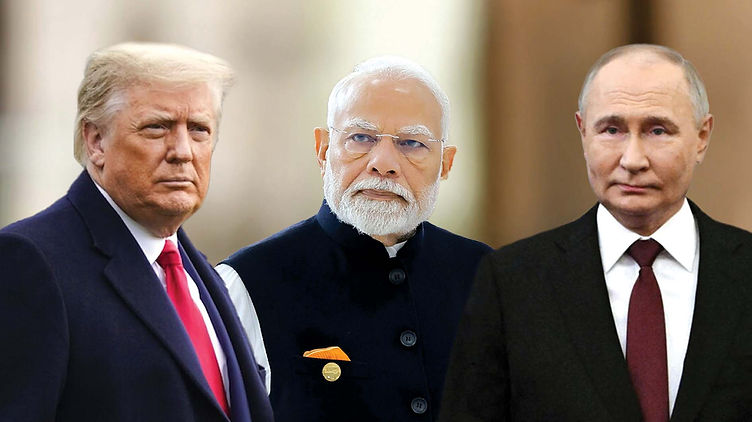
Washington's latest swing on Russian oil has handed New Delhi a rare break. But the same unpredictability that helps India today has cost it dearly before, and it will again.
President Donald Trump has decided to buy diesel from Russia. The move surprised even his own Republican Party, which had backed cutting Moscow's oil revenues as the route to ending the war in Ukraine. Straight after it came a 60-day waiver delaying new legislation from Senator Lindsey Graham that would put heavy tariffs on countries importing Russian oil.
Writing in The Secretariat on 21 October 2026, senior economic journalist Sushma Ramachandran argues that the about-turn is about American politics, not grand strategy, and that India should not treat it as a lasting shift.
Pump prices before the midterms
The trigger is the price of fuel in the US. American retail prices follow global markets closely. In India, by contrast, state-run oil companies set pump prices on government guidance, which has kept petrol and diesel fairly stable here even as world prices climbed.
Over the past year, according to Ramachandran, US gasoline has risen from about $3 to $4.3 a gallon, while diesel has nearly doubled, from $3.6 to more than $6. Diesel hits farmers, truckers and ranchers hardest, and they are among Trump's most loyal voters. With the CNN Poll of Polls putting his approval at 34% ahead of the November midterm elections, the White House is under pressure to show relief at the pump. Losing the House of Representatives would make much of his remaining agenda hard to pass.
A deal that may not deliver
The agreement provides for 300,000 tonnes of Russian diesel at first, then 500,000 tonnes in November and one million tonnes in December, with a further three million tonnes proposed soon after. Whether Moscow can supply this is uncertain. Ukrainian strikes on Russian refineries have left Russia short of fuel, and it has recently made emergency purchases of petrol and diesel from India. Washington has also asked Kyiv to stop hitting Russian energy infrastructure.
Even if the diesel arrives, Ramachandran argues, the volumes are too small for the American market to bring prices down much.
The plan has alarmed Ukraine and Europe. The European Union says the only way to end the war is to keep up pressure on Russia, and it is clearly worried that extra oil revenue would steady Russia's economy. Oil markets, meanwhile, remain jittery. Fears over Iranian threats to the Strait of Hormuz and Houthi attacks on Saudi Arabia have pushed Brent crude close to $110 a barrel. US officials say crude flows from the Gulf are back to nearly 80% of their level before the US-Iran war, but refined products such as diesel are still scarce.
Why India gains, for now
For India, the immediate effect is good. Pausing the Graham law and buying Russian diesel takes pressure off a relationship that has been under real strain. Secretary of State Marco Rubio has presented the restraint on Russia sanctions as support for partners like India that cannot easily stop buying Russian energy.
The timing matters for trade. The India-US trade deal has been stuck for months, with both sides repeatedly saying it is nearly done, and Russian oil imports have been a sticking point. Recent statements from officials on both sides suggest most of the disputed issues are now settled and an announcement may come soon.
The cost of whiplash
The deeper problem is unpredictability. Stable relations between countries need steady support on issues each side considers vital. Ramachandran notes that India has so far borne the brunt of sudden US shifts on tariffs and energy supply. This round has gone India's way; the next may not.
For New Delhi, the lesson is to bank the gains from this reprieve, close the trade deal while the window is open, and keep its energy sourcing diverse enough to absorb the next turn in Washington. India-US ties should expect more headwinds for the rest of Trump's term.