Bangladesh · Intelligence
Delhi’s Red Line: Inside the ‘Jamaat-MIM’ Pincer and R&AW’s Explosive Message to Tarique Rahman
While the world watches the return of Tarique Rahman, New Delhi is looking at a much more dangerous map.
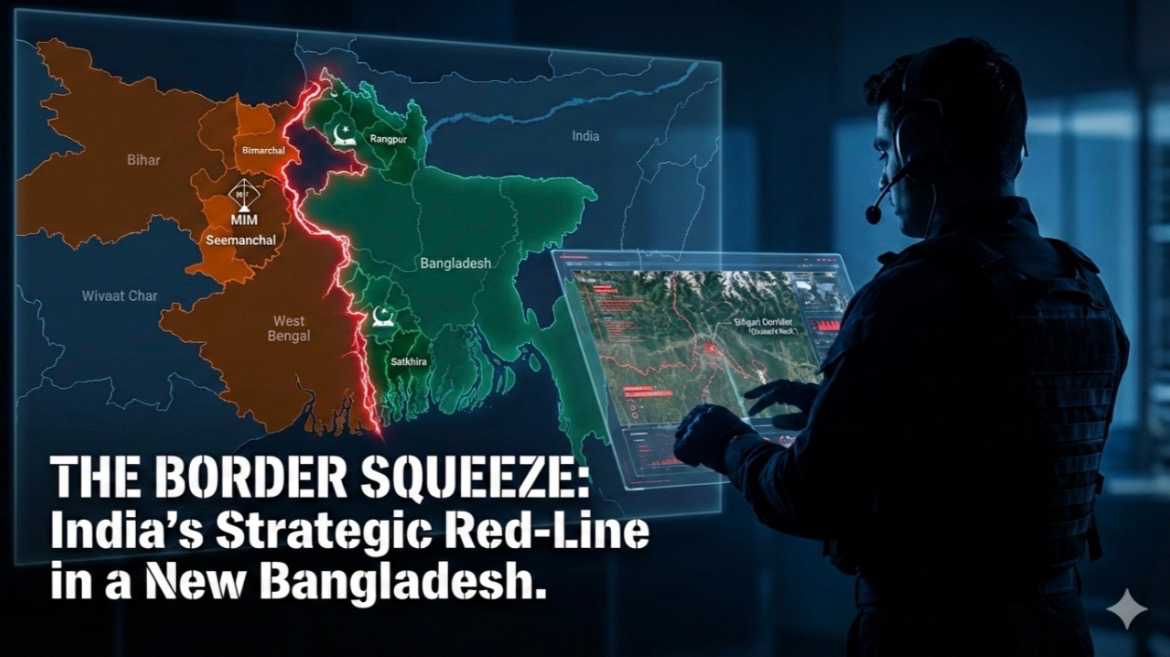
The 2026 Bangladesh election results are in, and while the world watches the return of Tarique Rahman, New Delhi is looking at a much more dangerous map. Beneath the surface of a BNP landslide lies a radical sweep of India’s borders that has triggered a massive shift in India’s national security doctrine.
By: The Big Story Editorial Team
Bangladesh has delivered a historic verdict. After 17 years in exile, Tarique Rahman and the Bangladesh Nationalist Party (BNP) have secured a massive two-thirds majority, winning over 200 seats. While Prime Minister Narendra Modi was quick to dial the hbu prime minister to discuss cooperation, the celebration in Delhi is overshadowed by a chilling geographic reality: Jamaat-e-Islami has effectively captured the Indian border.
The ‘Squeezing’ of West Bengal: The Jamaat-MIM Pincer
For West Bengal, the concern is no longer theoretical; it is a “squeezing” maneuver from both sides. While the BNP dominated the urban centers and the youth vote, Jamaat-e-Islami and its allies secured over 70 seats, but critically, they swept at least 80% of the seats along the Indo-Bangladesh frontier. From Satkhira and Jessore in the south to Rangpur and Dinajpur in the north, the border is now a “green belt” controlled by an organization historically known for its anti-India and anti-Hindu rhetoric.
Simultaneously, on West Bengal’s western flank, the Rise of Asaduddin Owaisi’s MIM in Bihar’s ‘Seemanchal’—districts like Kishanganj and Katihar that hug the North Dinajpur border—has created what BJP leaders describe as a “concerning” radical pincer. Union Minister Sukanta Majumdar warns that this dual rise of fundamentalist forces on both sides of West Bengal is a direct threat to national security. The “Chicken’s Neck” corridor, India’s narrow link to the Northeast, is now flanked by radicalized political ecosystems.
A ‘Wake-Up Call’ for Hindus?
The rise of Jamaat has already sent shockwaves through the minority communities in Bangladesh. Despite Tarique Rahman’s promises of a “safe Bangladesh for all,” the reality on the ground remains grim. Within one week of the election cycle, two Hindus—Dipu Chandra Das and Amrit Mondal—were killed amid anti-India protests.
In West Bengal, the political narrative is shifting rapidly. BJP IT Cell chief Amit Malviya has called the results a “wake-up call” for the state’s Hindus, alleging that the current Trinamool Congress administration has patronized the very infiltration that now empowers radical forces across the fence. With at least 90 Assembly seats in West Bengal bordering Bangladesh, the 2026 results in Dhaka are expected to escalate polarization and reshape the voting patterns in these sensitive districts.
The ‘Red Lines’: R&AW’s Secret Message to Dhaka
New Delhi’s response is no longer restricted to diplomatic niceties. Through back-channel intelligence communications, India has communicated four non-negotiable “Red Lines” to Tarique Rahman’s incoming government. The message is clear: India will support Bangladesh’s economy, but security is the ultimate margin.
- 1. No More ‘Plausible Deniability’ In the past, BNP governments conveniently claimed they had “no knowledge” of Northeast Indian insurgents operating from their soil. India has now clarified: if credible intelligence is provided and no action is taken, India will view it as “politically protected” activity rather than a lack of awareness. This gives the Indian security forces a “green light” to deal with threats in their own way.
- 2. Ending the ‘Procedural Fog’ Intelligence agencies have flagged a tactic called “Procedural Fog”—where the Bangladeshi government uses “consultations” as a delay tactic to allow terrorists to disperse or destroy evidence. India has warned that from now on, “consultation” must mean immediate “action”.
- 3. The Narrative Permission Clause India will no longer tolerate the use of Bangladeshi soil for state-sponsored anti-India digital propaganda or radicalized mobilization. Delhi views these “narratives” not just as speech, but as recruitment tools that directly hurt Indian security.
- 4. The Third-Party Strategic Lever While Dhaka is free to engage economically with China or Pakistan, India has drawn a line against any strategic projects—such as 99-year leases or deep-sea ports—that could be used as a “lever” to undermine India’s security margins. India pointed to the “CPEC” (China-Pakistan Economic Corridor) as a cautionary tale of strategic overreach.
The Starlink Threat and ‘Selective Infiltration’
The nature of the threat is also evolving technologically. Indian intelligence is specifically concerned about the activation of Starlink in Bangladesh. There are fears that insurgent groups in the Northeast could use this satellite system for un-interceptable communication, creating a fresh security nightmare for the “Seven Sisters”.
Furthermore, the threat of infiltration has changed. It is no longer about mass migration, but “Selective Infiltration”—the entry of ideologues, fund couriers, and digital handlers. These actors are harder to detect but have a much higher impact on communal stability within India.
Conclusion: “You Start It, We Finish It”
Bangladesh stands at a crossroads, and Tarique Rahman faces the impossible task of balancing a national mandate with a radicalized border lobby. For India, the policy has shifted from reactive to proactive. As the R&AW message reportedly concluded: “You start it, we finish it.”
The 2026 election has redrawn the fault lines of South Asia. As Jamaat-e-Islami reactivates its financial and ideological channels through NGOs and charities, the “classic deniability playbook” is being countered by a new, assertive India. The security of West Bengal and the integrity of India’s borders now depend on how strictly these “Red Lines” are enforced.