South Asia · Deterrence
How India is Redefining Geopolitical Deterrence Without Firing a Single Bullet
Economic leverage, technology and “invisible” weaponry: India is no longer merely reacting to provocations.
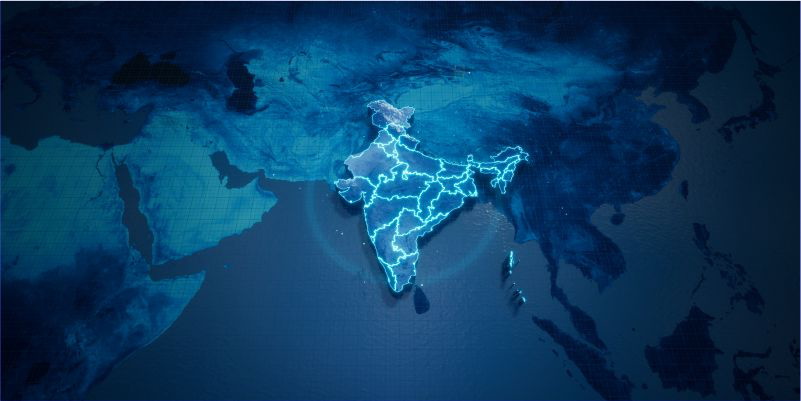
In the complex theater of South Asian geopolitics, a paradigm shift is occurring. India is no longer merely reacting to provocations; it is proactively dismantling the strategic designs of its adversaries through a combination of economic leverage, technological innovation, and “invisible” weaponry.
From turning a $50 billion Chinese investment into a liability to deploying “Ghost Trains” that secure nuclear deterrence, Delhi is rewriting the rules of engagement. Here is an in-depth look at the three pillars of India’s new strategic doctrine.
1. The $50 Billion Checkmate: Water as a Strategic Lever
For decades, the Indus Waters Treaty was viewed as a sacrosanct agreement that prioritized downstream flow to Pakistan. However, following the Pahal Gam terror attacks, India’s stance shifted: “Blood and water cannot flow together”.
India’s suspension of the treaty isn’t just a blow to Islamabad; it is a direct hit to Beijing’s pocketbook. China has invested over $50 billion in the Indus Cascade project —a series of five massive dams (Bungi, Diamer-Bhasha, Dasu, Patan, and Thakot) in Gilgit-Baltistan. This project aims to generate up to 40,000 MW of electricity, securing China’s influence over the Karakoram Highway and creating a debt-trap scenario where China could eventually lease Pakistani land, similar to Sri Lanka’s Hambantota port.
The Indian Counter-Move: India is fast-tracking $15 billion in hydropower projects (such as Sawalkot, Pakal Dul, and Ratle) on the western rivers. By building these upstream, India gains the ability to regulate water flow.
- The Consequence: Reduced or unpredictable water flow renders the Chinese-funded dams downstream inefficient.
- The Irony: China, which has historically weaponized water by withholding Brahmaputra hydrological data from India, now finds itself protesting “water warfare”. India is simply using its geographic advantage to protect its sovereign interests.
2. The Silent Killer: Neutralizing the Drone Menace
The landscape of modern warfare was forever changed by the drone swarms seen in the Nagorno-Karabakh and Russia-Ukraine conflicts. Pakistan and China have increasingly used cheap, difficult-to-track drones for provocations and smuggling across the LoC.
In response, India’s DRDO has developed a game-changing technology: the High Power Microwave (HPM) directed energy system.
Why HPM is Superior:
- “Soft Kill” Technology: Unlike traditional missiles that cost millions, the HPM system uses bursts of microwave energy to fry a drone’s electronics, sensors, and GPS.
- Swarm Defense: While a missile can hit one target, a single microwave beam can disable an entire swarm of drones simultaneously.
- Cost-Efficiency: Each “shot” costs only the price of electricity, making it a sustainable defense against cheap, mass-produced enemy drones.
- Stealth: The system is silent, flashless, and smokeless, making it nearly impossible for an enemy to locate the source of the defense.
While China has attempted to master this tech for years, India’s successful deployment gives it a clear technological edge in border defense.
3. The “Ghost Train”: India’s Ultimate Nuclear Insurance
In May 2024, Pakistan’s leadership suggested they might abandon their “No First Use” nuclear policy. In a world of high-altitude satellites and long-range drones, fixed missile silos and slow-moving road launchers are vulnerable to a “First Strike”.
Enter the Agni Prime Nuclear Missile Train.
In September 2025, India successfully tested a rail-based mobile launcher for the Agni Prime —a highly accurate, Mach 7 ballistic missile with a range of up to 2,000 km.
The Strategic Advantage of Rails:
- Invisibility: India has a 70,000 km railway network with thousands of tunnels. A missile car looks exactly like a standard freight wagon, making it impossible for Chinese or Pakistani satellites to track among 20,000 daily trains.
- Survival: If an enemy strikes India’s airbases or known silos, the “Ghost Train” remains hidden in a mountain tunnel, ready to deliver a devastating “Second Strike”.
- Speed: These trains can travel at 150 km/h, constantly changing position and launching within minutes thanks to canisterized technology.
By joining an elite club that includes only Russia, China, and North Korea, India has guaranteed that any nuclear aggression will be met with total and unavoidable payback.
Final Thoughts: The New Indian Doctrine
India is sending a clear message to the world: Peace is maintained through strength. By leveraging geography, investing in cutting-edge directed energy weapons, and securing its nuclear second-strike capability via its vast rail network, India is effectively neutralizing the “Two-Front War” threat.
For global investors and policy analysts, this signals an India that is not only self-reliant ( Atmanirbhar ) but also strategically sophisticated. The “Masterstrokes” in Kashmir and on the rails are proof that India is ready to protect its ascent to a global superpower.
What are your thoughts on India’s shift toward directed energy weapons and rail-mobile deterrence? Does this change the balance of power in South Asia permanently?