Bangladesh · Border security
The Dhaka Reset: Tarique Rahman’s Landslide, the Jamaat Shadow, and India’s High-Stakes Border Security
Bangladesh has spoken. What the shift in Dhaka means for radicalisation networks and infiltration along India’s border.
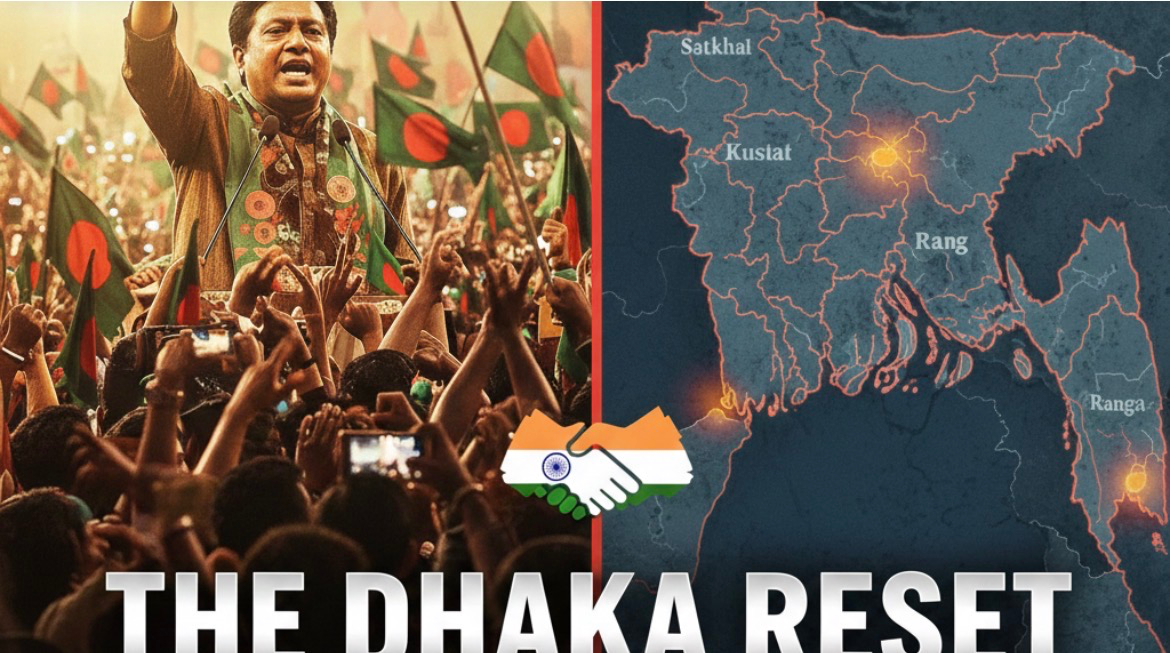
Bangladesh has spoken. In a historic shift that has sent ripples through the corridors of power from Dhaka to New Delhi, the Bangladesh Nationalist Party (BNP), led by the formerly exiled Tarique Rahman, has claimed a staggering victory in the 2026 elections. As the first polls since the 2024 uprising that ended Sheikh Hasina’s era, this election marks more than just a change in leadership; it is a total recalibration of the geopolitical landscape in South Asia.
For India, the results are a complex tapestry of strategic opportunity and deep-seated security concerns. While Prime Minister Narendra Modi was quick to congratulate Rahman, signalling a “strategic message” of readiness to engage, the “Jamaat Factor” looming on the border remains a powder keg.
The Return of the King: Tarique Rahman’s Mandate
After 17 years in exile in the UK, Tarique Rahman has returned to lead the BNP to an unofficial victory in 212 constituencies. This is not just a political comeback; it is a referendum on the future of Bangladesh. Parallel to the general election, voters overwhelmingly supported a constitutional referendum, with 65.3% favoring prime ministerial term limits and stronger checks on executive power.
Tarique Rahman is being viewed by some as a “more liberal option” compared to the hardline Islamist factions, but he faces a monumental task: stabilizing a shattered economy and managing a volatile coalition.
The Jamaat Shadow: An “Arc of Concern” on India’s Border
The most alarming development for Indian intelligence is the performance of Jamaat-e-Islami. Running a sophisticated campaign, the Islamist coalition secured 70 seats, with a terrifyingly concentrated sweep in areas bordering West Bengal.
According to an exclusive assessment, districts like Satkhira, Kushtia, and the Khulna belt —which face West Bengal and the Siliguri corridor—have emerged as Jamaat’s strongest clusters. Intelligence agencies warn that this creates a “continuous arc” of influence that could facilitate:
- Radicalization Ecosystems: A shift from covert to “semi-open” operations led by digital handlers and “WhatsApp preachers”.
- Selective Infiltration: Moving away from mass migration toward high-impact infiltration of trained ideologues and fund couriers.
- The ISI Footprint: Concerns that Pakistan’s ISI will use Jamaat to fund anti-India propaganda and reactivate cross-border extremist networks.
The Minority Crisis: Will Hindus Have a Voice?
For India, the safety of the Hindu minority in Bangladesh is a “non-negotiable” criterion for bilateral ties. The rise of Jamaat in border districts has triggered fears of “silent displacement”. Reports suggest that Hindu minorities may face increased pressure through land disputes and intimidation as radicals gain “formal political legitimacy” at the local level.
The next government will be under intense international scrutiny to protect human rights and ensure that the anti-Hindu violence that gripped the country post-2024 does not become a permanent feature of the new dispensation.
The Geopolitical Tightrope: India, China, and Pakistan
The BNP government is set to inherit a diplomatic “tightrope walk”. While Tarique Rahman knows he needs India for economic stability, his coalition partners may push for a tilt toward China and Pakistan.
China’s influence remains a potent factor, as they have historically provided support and defense to factions aligned with the new power structure. However, New Delhi has moved swiftly with diplomatic recognition, aiming to reduce market uncertainty and underscore the “depth of historic India-Bangladesh ties”.
The Way Forward: A “Wait and Watch” Diplomacy
India’s approach is currently one of cautious engagement. The goal is to “reset the ties” that spiraled downward during the interim regime. While Tarique Rahman has signaled a desire to “take all international players along,” the reality of governing with a resurgent Jamaat will be his—and India’s—biggest test.
As the new government takes the oath in Dhaka, New Delhi remains vigilant. The focus is clear: Stability in Dhaka cannot come at the cost of security in West Bengal.